

The Indefensible Digital Frontier: How Weaponized Finance and Digital Privacy Became the New Human Rights Battleground
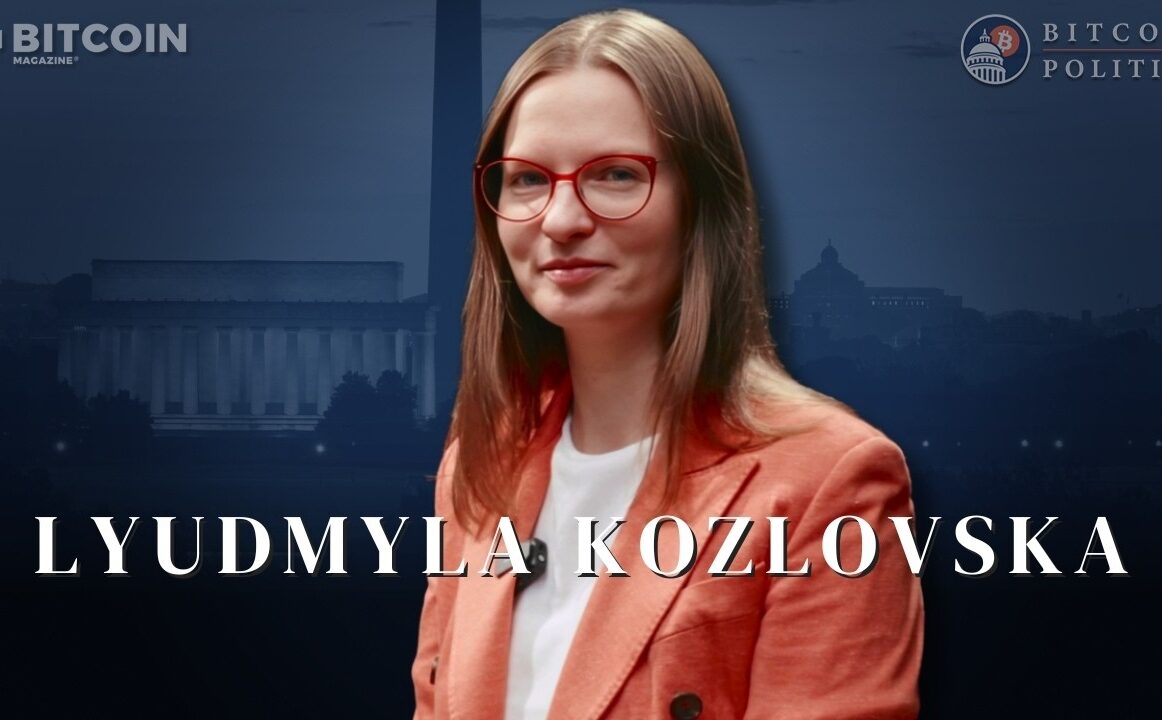
### An In-Depth Conversation with Lyudmyla Kozlovska on Bitcoin, Nostr, and the Fight for Digital Sovereignty In an era defined by ubiquitous digital interaction, the core tenets of freedom of speech, communication, and financial autonomy
An In-Depth Conversation with Lyudmyla Kozlovska on Bitcoin, Nostr, and the Fight for Digital Sovereignty
In an era defined by ubiquitous digital interaction, the core tenets of freedom of speech, communication, and financial autonomy are increasingly under threat. The lines between physical and digital liberty are blurring, making digital rights an essential pillar of human rights defense. YakiHonne, a decentralized media client built on the Nostr protocol, which champions freedom of speech and creator asset ownership, recently hosted a conversation with Lyudmyla Kozlovska (LK), a Human Rights Defender and Bitcoin Advocate. In this extensive interview, LK details her 16-year journey in activism, the personal motivations behind the Open Dialogue Foundation (ODF), and the escalating crisis of digital censorship and financial weaponization by both authoritarian and Western governments.
The Paramount Importance of Digital Privacy
For Lyudmyla Kozlovska, the fight for human rights has fundamentally shifted into the digital realm. With over sixteen years dedicated to advocacy, she asserts that privacy in the digital sphere is non-negotiable, particularly the privacy of communication and payment. "I think that privacy and everything around privacy in the digital world, especially privacy of communication and privacy of payment is a key and a basis for any kind of privacy, both right now, physical and digital, because we live in a digital world, and everybody wants to take out our privacy,". LK highlights that our personal data is actively being sought, traded, and hunted for by various actors. She stresses the profound, long-term implications of this erosion of privacy, urging people to consider how their interactions online today could potentially expose future generations, including their children and loved ones. According to LK, a critical problem is the widespread lack of awareness regarding these digital exposures. The organization she spearheads, the Open Dialogue Foundation, reflects this shifting landscape. While originally focused solely on traditional human rights concerns, ODF has undergone a transformation to increasingly prioritize the protection of digital rights.
The Weaponization of Financial Regulations Against Civil Society
The most immediate threat to digital rights, according to ODF’s experience, stems from the weaponization of financial oversight tools. The Foundation considers itself a victim of various abuses, specifically citing those related to Financial Action Task Force (FATF) regulations. LK notes a dangerous trend where powerful entities, particularly Western governments, classify decentralized and privacy-enhancing solutions; referred to as "freedom tech", in a negative light. This process involves:
-
Discouraging investment in these crucial technologies.
-
Disparaging their usage and development.
-
Classifying them as "illicit tools of activities
" The consequences are far-reaching. These negative narratives, once established in the West, are "easily replicated by authoritarian regimes," who then use them as justification to move "even more against users & developers ". This results in an almost total lack of investors willing to support freedom technology in authoritarian states. Lyudmyla Kozlovska warns that this slide toward digital classification and the categorization of entire populations by their digital footprint is becoming alarmingly "normal" and must be actively opposed. The solution, she proposes, lies in a strategic alliance:
"This is why it's so important to unite knowledge of activists like me and also developers like you who create new tools, we have to support each other, that's how we will be able to survive in this not easy world reality,".
The interviewer, Ezekiel, affirmed this danger, recounting a personal experience of financial repression in an African country where the government froze their funds and accounts, leaving them stranded. This experience underscored the vital necessity of the work done by the Open Dialogue Foundation.
LK also stated using authoritarian regimes, especially Kazakhstan and Belarus as key examples of how they were able to weaponize FATF recommendations within minutes and "abuse intelligence commission Western countries to repress people domestically" and "transnationally". LK detailed Kazakhstan's use of cybersecurity laws and anti-money laundering regulations to prosecute people globally.
LK herself became a victim of this transnational weaponization. She disclosed that dozens of secret agents from Kazakhstan sought to obtain her "behavioral data," including travel, communication, and financial data, from all EU member states and the US. The goal was to understand her methods for gathering testimonies of torture victims and identifying "thousands of perpetrators violating human rights". To achieve this, Kazakhstan fabricated a criminal case against her in Belgium. The regime's goal, confirmed by a Belgian investigative judge, was to use the Belgian justice system as a "proxy state" to illegally acquire data globally.
Furthermore, LK exposed Kazakhstan's promotion of Interpol's Silver Notice, a mechanism that specifically targets assets and crypto assets. This allows authoritarian states to track people’s transactions and assets without a court decision and without the victims' knowledge. This practice creates a dangerous vulnerability: data leaked from financial institutions or bought by corrupt police can be sold to "gangsters" who are then able to "destroy your life or get your crypto assets," as seen in rising cases of kidnapping and organized crime leveraging this information.
The Genesis of the Open Dialogue Foundation: A Proof of Work

The creation of the Open Dialogue Foundation was a "very natural" progression for LK, deeply rooted in her family's history of political persecution. As a teenager, she personally witnessed and benefited from the support provided by human rights defenders to her politically prosecuted family members. LK also recounted her personal investment in the Orange Revolution in Ukraine, an event her family also sponsored. She vigorously rejected the narrative that movements are funded by "magic money of sorrows" or sponsored by regimes. Instead, she saw it as a choice made by citizens:
"It's plenty of Ukrainians like me, like my family, we wanted to live in the free society, and we invested in it,".
This commitment to investing in freedom is what led her to embrace the philosophy of Bitcoin. She drew a direct parallel between political action and the Bitcoin ethos:
"You can talk a lot, and it will be proof of talk, but you can do things, and this is proof of work. Yeah, that's why I love Bitcoin. And when you invest money in your freedom, this is your proof of work, and this is what I was doing,".
LK founded the organization, investing her own money as a "successful business woman," with her family contributing as well. However, this very success exposed a brutal reality: they were unaware of how easily financial tools could be weaponized. Their business was "crushed," the foundation was targeted, and people connected to them were "severely prosecuted" through the weaponization of financial data.
"I know what it means when you have all possible political connections, they will not work if you don't have privacy tools around you in your hands,".
Bitcoin as a Lifeline: The Ukraine Use Case
When asked for a concrete example where Bitcoin or privacy technology became a lifeline for delivering aid under repressive financial conditions (like those imposed by FATF rules), LK points to the 2022 full-scale Russian invasion of Ukraine. LK first provided a critical prerequisite: the ability to use privacy technology requires a "free space in Western countries". The fundamental challenge is that developers, users, and investors are all human; if they are arrested, their freedom is over, and the development and scaling of privacy tools become problematic. The invasion of Ukraine, however, served as an undeniable use case for decentralized finance.
-
When the invasion commenced in February 2022, traditional financial institutions were "completely paralyzed," unable to process transactions for humanitarian aid coming from or going back to Western countries.
-
Fortunately, Ukrainians were already highly engaged in the cryptocurrency space, being the** third country in the world for mass cryptocurrency adoption** at the time.
-
The invasion became the moment of the "biggest use case of Bitcoin and stable coins," which were used for transacting, buying, and collecting humanitarian aid. The Open Dialogue Foundation played a role in facilitating these operations and educating people on their use.
LK provided a crucial counterpoint to the Ukraine success story, highlighting the experience in Belarus. She noted that Bitcoin and privacy payment tools were also a lifeline there, enabling the opposition to fundraise millions of dollars in cryptocurrencies. However, the Lukashenko regime eventually found a way to identify these transactions on-chain and subsequently "goafter every single donor," using FATF laws to prosecute the opposition's backers. This danger is compounded by the fact that the use of cryptocurrencies and P2P transactions is often negatively classified in the West, a narrative that dictatorial regimes readily exploit for repression. Similarly, in Kazakhstan, the government arrests everyone who facilitates P2P transactions.
The Future of Freedom Tech and the Need for Perpetual Defense

Looking ahead, LK stresses that platforms and protocols promoting freedom of speech, such as Nostr, face a constant battle against centralized power structures. She warns of growing issues with algorithms, "Shadow bands," and the "absolutely arbitrary" deletion of content and entire pages. While Nostr offers a solution where users can switch relays if one fails, the relays themselves are developed by people or companies, such as YakiHonne. If these relays, even a large number of them, are collectively classified as "hate speech tools" or tools that provide illicit activity, it will undermine their legitimacy. This deliberate classification prevents investment, collapses businesses, and can even lead to forms of "physical repression". The ultimate conclusion is a call to action:
"This is why we say that freedom of speech has to be protected, and development of freedom speech technology has to be protected, and it's impossible to expect that somebody is going to do it instead of us if we don't defend it,".
LK insists that the defense of privacy and digital rights, including speech, communication, and transacting must be an "everyday activity". The greater the number of people who internalize this vigilance, the stronger their collective freedom will be. The convergence of human rights activism and decentralized technology development represents the vanguard of modern liberty.
To Sum It Up
The journey detailed by Lyudmyla Kozlovska the founder of Open Dialogue Foundation is a sobering testament to the immense personal sacrifice required in the modern fight for human rights. From enduring financial repression that crushed their business to battling sophisticated, transnational abuse by regimes in countries like Kazakhstan and Belarus, LK’s advocacy stands as a powerful "proof of work" for freedom. Their unflinching commitment, alongside the innovative developers building tools like Nostr and the immutable financial infrastructure of Bitcoin, serves as the vanguard of digital resistance against centralized control and the weaponization of data. We honor the courage of the ODF and every activist worldwide who continues to stand on the side of liberty, and we must heed their call: the defense of privacy is not a passive hope but a necessary, "everyday activity." Their collective push for a better world must continue, ensuring that digital sovereignty, the right to private communication, anonymous transaction, and self-owned identity becomes an unquestionable and indefensible human right for all.