

Notes on the Time of the Bedouin – Part 2
Ibn Khaldun’s idea of 'asabiyyah may find new form today in the digital bonds we build through Bitcoin and Nostr
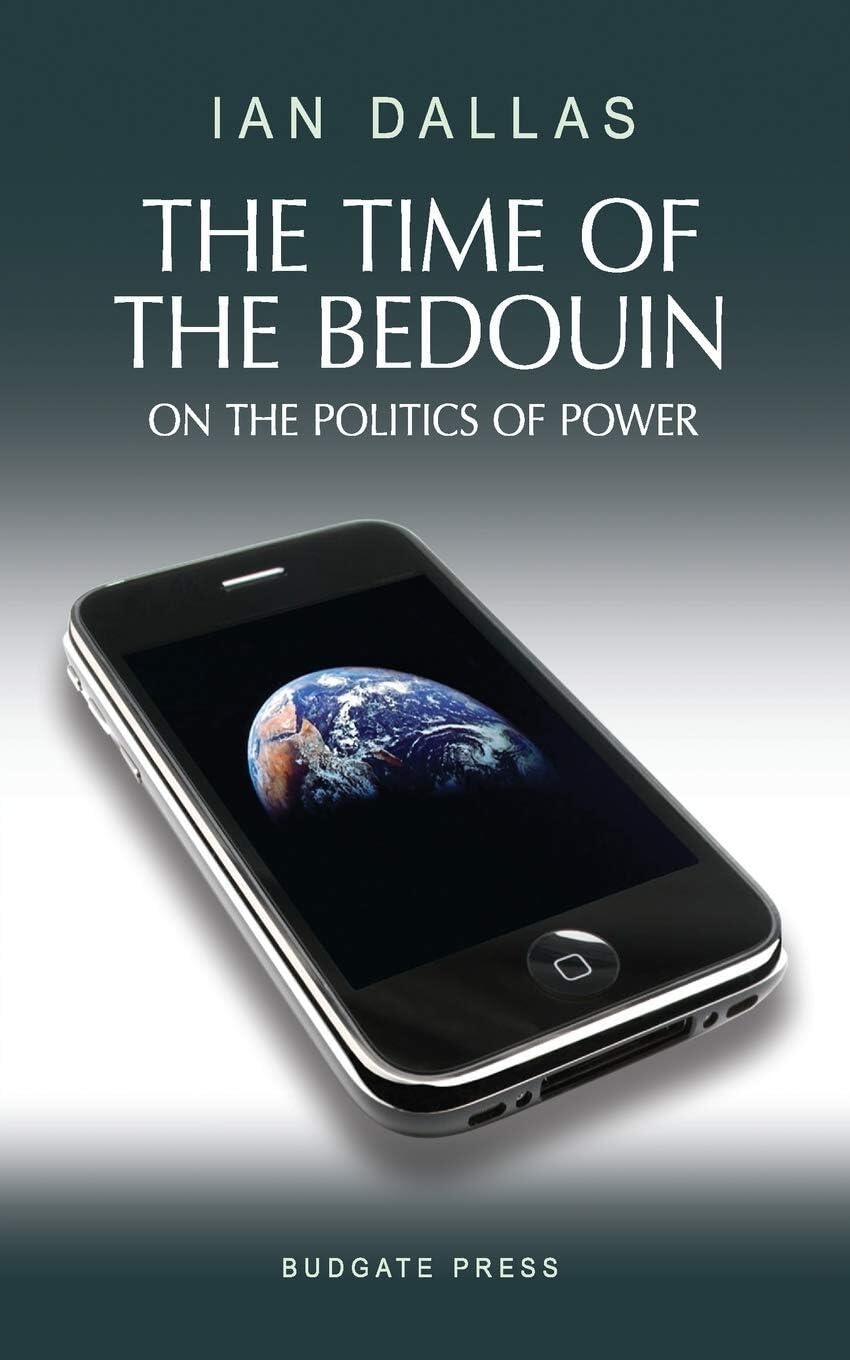
Reading the rest of the chapter feels like Dallas finally flips the switch from diagnosis to program implementation. The four witnesses (Heisenberg, Heidegger, Jünger, Schmitt) have already certified that the bourgeois financial order is spent, and now Ibn Khaldun steps forward as the operating manual for renewal. The hinge is 'asabiyya of course. Dallas quotes Khaldun to set the stage:
“Asabiyya gives protection, defence and attack, and every enterprise required by belonging to the group. Men, by their nature, need in every social organisation an authority and arbiter to avoid mutual aggression. This person must dominate the group, depending on this, on 'Asabiyya, otherwise he cannot fulfil his task. That domination is power."
To me that line reframes everything. Solidarity must crown itself in authority or it dissolves into sentiment. And for anyone remotely familiar with his works, Khaldun’s vision is cyclical. History is not a conveyor belt to utopia but a curve of rise, crest, and decline. So the task is to locate ourselves on that curve and act without nostalgia (This is where the quartet matters. They force us to admit where we are right now).
Recall from the previous essay that Khaldun’s third stage is Kingship, and Dallas mentions its phases of tyranny -> luxury -> docility, with a deliberately classical sense of “tyrannos,” or the empowered king, as the high water mark. To de-romanticize this, he brings in Belloc ( https://en.m.wikipedia.org/wiki/Hilaire_Belloc) to show that a monarch is not a costume but “one real and attainable human head” finally responsible for the commonwealth:
"The leading function of the Monarch is to protect the weak man against the strong, and therefore to prevent the accumulation of wealth in a few hands, the corruption of the Courts of Justice and of the sources of public opinion. I say, imagine any (one of these Kings) not through their character, but through the powers granted them by the constitutions of their times, placed at the head of the modern State. What do you think would happen to the corrupt judges, to the politicians who take bribes, to the great trusts that destroy a man’s livelihood, to the secret financiers boasting that they control the State? Their blood would turn to water."
Belloc’s contrast is devastating and I feel like it pretty much applies to current times as oligarchies and parliaments diffuse blame by design, so “no one” is responsible and therefore no one is really punished or overthrown. Only personal rule can cut through that knot.
We can also see that Kingship has a monetary element as well. Khaldun marks the arrival of mature Kingship when the ruler adopts natural currency (gold and silver), when 'asabiyya has taken power, prosperity grows, then luxury follows, then docility. At this softening apex, a new ʿasabiyya must, and will, arise. (As a Bitcoiner, I can’t help but hear “natural currency” as hard money. Dallas picks metal here, but to me the overall principle is hardness versus fiduciary abstraction.)
Dallas then complements Jünger with Khaldun. The Waldgänger from Der Waldgang ( https://de.m.wikipedia.org/wiki/Der_Waldgang) is the person Khaldun requires, which is not some romantic hermit (“not a romantic or literal image…”) but the ordinary man who, under total surveillance and security, goes inward and recovers “the meeting with oneself, the inalterable core of the self." From that interior core, “there is born a Resistance,” that is local and contagious. Jünger even gives us the math: “If in a city of one million there are 10,000 Waldgänger—this is an immense power… enough to bring about the fall of the most powerful tyrants.” The traits matter here. He still “knows the difference between gold and printer’s ink” (real resources versus claims on those resources) and he is not some edgy anarchist or some gangster in the hood that doesn't care about the law or private property. He orients his joy to the Absolute and not in the spectacle. He is not a soldier following orders, but he is many across a town, and he is hard to govern and impossible to own. In short, Jünger describes the man and Khaldun supplies the form and together they can found a new Nomos.
Dallas then scans for where Bedouin conditions already live, usually near the city but not absorbed by it. He gives examples. In the USA, Mexican communities live in districts and have strong kin, but he thinks they're not yet morally elevated toward ʿasabiyya. We also have Native Indians, but they're corrupted by concession regimes and casinos. Then we have the black population who are betrayed by the state and are mass-incarcerated, and yet they have been turning toward Islam. But Dallas argues that Europe is further along where countries like England, France, and Germany, large Muslim populations maintain strong linguistic identities through Urdu, Arabic, and Turkish. Here and in general, the state's pervasive suspicion becomes an accelerant and transforms social dynamics by inadvertently activating ʿasabiyya among marginalized communities. In South Africa, the regime’s attempt to divide ("inventing a near-fictional category of ‘Cape-Malay’") cemented a Muslim counter-public with a coherent story of struggle: “on the margins. United. Powerful in their Islam. 'Asabiyya has already begun.” We can dispute any given case study presented here, but the pattern is consistent in that marginalization + moral horizon + proximity → potential 'asabiyya.
So at this point Dallas just says it. Islam is already the Nomos that ends the night of nihilism. Not as an ideology but as Deen al-Fitra, or a binding law that abolishes usury at the root, returns wealth to reality rather than paper, and re-politicizes life with oath, bayʿa, zakāt, jizya, and a personal ruler you can actually hold to account. He re-emphasizes his “liberating couple” idea here through the life of the Messenger ﷺ and Sayyida Aisha, “Half the Deen from Aisha," as transmitter of law and as political intelligence separating prophecy from dynastic rule (I should mention that you can feel the polemic edge in his aside on Shiism in this passage). He also argues that so-called “Islamic terrorism” was the Sect’s last and most desperate simulation, or essentially an instance of the very terror-cycle he mapped earlier, which is so entangled with manufacturing and infiltration that it became impossible to tell which operation belonged to whom. The net effect was to hide Islam’s political and social nature behind noise.
To prevent the whole thing from hovering as poetry, Dallas lands on Istikhlāf, or vicegerency, as a social charter. He gives it in very clear terms that you can agree with or contest but not misread: “man is the guardian of the world,” who is responsible for land, sea, sky. He lays it all out:
"He has to answer for the usage of what is on the earth, and under it. Mans charge is that he must abolish usury — even to a blade of grass. Man’s charge is also the protection of man by the application of the Law. This demands the abolition of penitentiary punishment and torture, for example, and the execution of rapists and child violators. This means also a small tax on non-Muslims in Muslim lands, much less than current VAT, to assure their safety and security. This means the abolition of taxation, except for the commanded poor-tax of Zakat which must be collected, not given. This means no military conscription by the State."
And then Dallas asserts that the engine that makes 'asabiyya durable is Sufism, because it teaches both the science of the self and the inner journey to the Lord (which is just another way of saying interiority before institution, core before crown, etc.). Only after setting this foundation does he lay out the vision and the call to action at the very end of the book:
“Asabiyya is the order of the day. Its success will finish that long period of darkness from 1789. The atheist-bankers’ Revolution is at an end. The restoration of personal rule will follow. The restoration of Kingship will have been achieved. The Great Interregnum will be over at last. The time of the Bedouin has begun."
If the first half argued that terrorism, nihilism, and suicide are the late metabolism of the police-financial State, then this half argues that the only exit is religion-bound solidarity that crowns itself in responsible authority and settlement in sound money. It is Wagner’s Ring back to the river. It is Khaldun’s Bedouin back into the city. It is Jünger’s forest passage written across a whole town. And whether you accept every detail of Dallas’ sociology, the structure is hard to unsee once you notice it!
Of course, I have to tie this all back in to the Bitcoin and Nostr stacks. When Jünger says the Waldgänger still knows the difference between “gold and printer’s ink”, I hear the difference between settlement and promise, between the actual keys you hold and permissions you rent. Bitcoin, as I've argued extensively being anti-Riba, is a live experiment in non-usurious and final settlement. Similarly, we could say that Nostr is a live experiment in ʿasabiyya-like voluntary binding, where there exists small bands that can speak, coordinate, build, and endure without becoming yet another “headless” fiat bureaucracy. Cyberspace can be thought of in general, especially in the age of hypermodernity, as the terrain where the forest passage increasingly happens, where a million quiet refusals and a few thousand durable bonds might add up to something that looks suspiciously like meaningful and permissionless resistance, and, if God wills, the early grammar of a new Nomos.