@nprofile1q... Once again, you have no clue about history of Eastern Europe, you don’t even know how “kings” are called there (not “kings”).
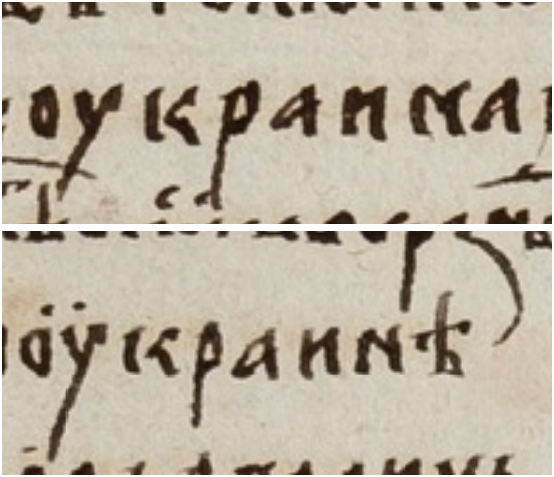
The territory of today’s Ukraine called Rus’ - with the same language, religion and culture as today’s Ukraine - was a powerful player already in 10-11th century, when Moscow was basically a swamp. Back then it was called primarily Rus’ (Ruthenia in English) but the name “Ukraine” appears already in 12th century. As a matter of fact, it was one of the largest states in Europe back then.
Eastern part of Rus’ was invaded by Mongols in 13th century and was occupied by them until 15th. The vassal state of Mongols on Slavic lands was called “Muscovia” and heavily influenced by Mongol culture and language. That’s when written sources started using the term “Russia” to describe Muscovia and historians started referring to the original Rus’ as “Kievan Rus’”. Much later Moscow simply declared itself the only continuation of “Rus’” and claimed the original Rus’ aka Ukraine never existed. This is of course bullshit, contradicted by many historic sources.
Today Russian historians stopped using the term Rus’ or even “Kievan Rus’” whatsoever and instead simply speak of “pre-Mongol period”, because any references to Rus’ are quite inconvenient for them.
As for the cultural differences, Muscovia aka Russia is dominated by collective society where the concept of individual rights or freedoms does not exist, which is why it adopted totalitarian Bolshevism and today Putinism with such an enthusiasm. For the Western Slavs, including the original Russians, Poles and today’s Ukrainians personal freedoms and rights are fundamental part of the social structure.