

How organized is Iran's Special Forces units? The answer is very
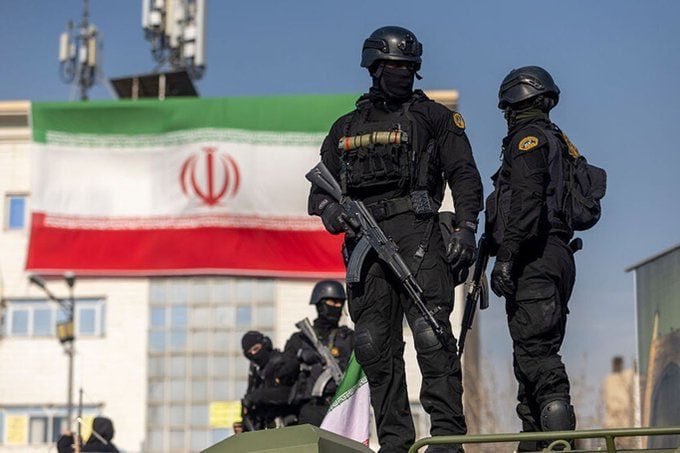
The forces are divided primarily between the regular Army (Artesh) and the Islamic Revolutionary Guard Corps (IRGC).
The IRGC handles external operations and unconventional warfare, while the Artesh focuses on territorial defense, maintaining top-tier elite units.
Both work in close integration with Basij militias, creating a resilient structure that is extremely difficult to neutralize.
During the Iran-Iraq War, Basij volunteers underwent intense specialized training for infiltration missions that even included the Hawizeh and Majnoon marshes, operations that required combat divers and swimmers.
The success of those missions directly gave birth to the elite Fatehin units.
Quds Force (IRGC)
The Quds Force is Iran’s arm for foreign operations and asymmetric warfare, with around 5,000 elite operators. It specializes in training, equipping, and coordinating allied groups such as Hezbollah, the Houthis, and Shia militias in Iraq and Syria.
It has direct combat experience in Libya, Yemen, and especially Syria. On April 6, 2026, Israel announced the elimination of Asghar Bagheri, commander of the Quds special operations unit, in Tehran. He was immediately replaced by another leader already designated in the chain of command, once again proving that Mossad-style targeted assassinations have had zero practical effect on degrading Iranian units’ capabilities.
Saberin Unit (IRGC)
The most capable ground commando unit in the IRGC, with 3,000 to 5,000 soldiers. Created in 2000 to fight insurgencies in the mountains along the Iraq and Turkey borders, its members undergo intense courses in climbing, high-altitude survival, and combat in difficult terrain. They have real-world experience against the PJAK in northwestern Iran and in operations in Syria. The unit is also highly experienced in joint training with Russian and Chinese special forces.
Fatehin - The Elite of the Basij
Selected volunteers who receive full commando-level training. With an estimated 5,000 to 10,000 fighters, they specialize in urban warfare, sieges, parachuting, rappelling, and expeditionary operations. Today they are the most effective “armed ideological arm” for Iran’s land power projection.
65th NOHED Brigade (Artesh) The elite of the regular Army, with around 3,000 to 4,000 paratroopers. Specialists in parachute jumps, hostage rescue, sabotage, and silent infiltration, they are known as “ghosts” in the environments where they operate. Their training includes mountain warfare, snow-covered peaks, and ravines, making them extremely versatile.
The forces are divided primarily between the regular Army (Artesh) and the Islamic Revolutionary Guard Corps (IRGC).
The IRGC handles external operations and unconventional warfare, while the Artesh focuses on territorial defense, maintaining top-tier elite units.
Both work in close integration with Basij militias, creating a resilient structure that is extremely difficult to neutralize.
During the Iran-Iraq War, Basij volunteers underwent intense specialized training for infiltration missions that even included the Hawizeh and Majnoon marshes, operations that required combat divers and swimmers.
The success of those missions directly gave birth to the elite Fatehin units.
Quds Force (IRGC)
The Quds Force is Iran’s arm for foreign operations and asymmetric warfare, with around 5,000 elite operators. It specializes in training, equipping, and coordinating allied groups such as Hezbollah, the Houthis, and Shia militias in Iraq and Syria.
It has direct combat experience in Libya, Yemen, and especially Syria. On April 6, 2026, Israel announced the elimination of Asghar Bagheri, commander of the Quds special operations unit, in Tehran. He was immediately replaced by another leader already designated in the chain of command, once again proving that Mossad-style targeted assassinations have had zero practical effect on degrading Iranian units’ capabilities.
Saberin Unit (IRGC)
The most capable ground commando unit in the IRGC, with 3,000 to 5,000 soldiers. Created in 2000 to fight insurgencies in the mountains along the Iraq and Turkey borders, its members undergo intense courses in climbing, high-altitude survival, and combat in difficult terrain. They have real-world experience against the PJAK in northwestern Iran and in operations in Syria. The unit is also highly experienced in joint training with Russian and Chinese special forces.
Fatehin - The Elite of the Basij
Selected volunteers who receive full commando-level training. With an estimated 5,000 to 10,000 fighters, they specialize in urban warfare, sieges, parachuting, rappelling, and expeditionary operations. Today they are the most effective “armed ideological arm” for Iran’s land power projection.
65th NOHED Brigade (Artesh) The elite of the regular Army, with around 3,000 to 4,000 paratroopers. Specialists in parachute jumps, hostage rescue, sabotage, and silent infiltration, they are known as “ghosts” in the environments where they operate. Their training includes mountain warfare, snow-covered peaks, and ravines, making them extremely versatile.
1
