On 8 April 2014 #Ukraine #Kharkiv could have seen a repeat of what happened in Sloviansk or Donetsk: an armed coup carried out by #Russia militias, who seized administrative buildings by force and posed as ‘self-defence’ groups.
However, in Kharkiv, a skilfully executed operation by police counter-terrorism units on 8 April led to the arrest of the Russian militants without a single shot being fired or a drop of blood being shed.
At the same time, urgent phone calls were being made by Russian agents to Sergei Glaziv, an adviser to the Administration of the President of the Russian Federation, who was coordinating and financing these military coups.
Less than a week after Kharkiv, ‘Girkin’s group’ – that is, Russian Spetsnaz – would enter the Donbas from Russia, murdering Volodymyr Rybak, mayor of Horlivka, and other civilians and seizing power in Sloviansk.
In less than a month, the Russians will cause a tragedy in Odessa, during which 48 of their supporters will die in a fire they themselves started at the Trade Union House, after Russian agents shot three Euromaidan activists.
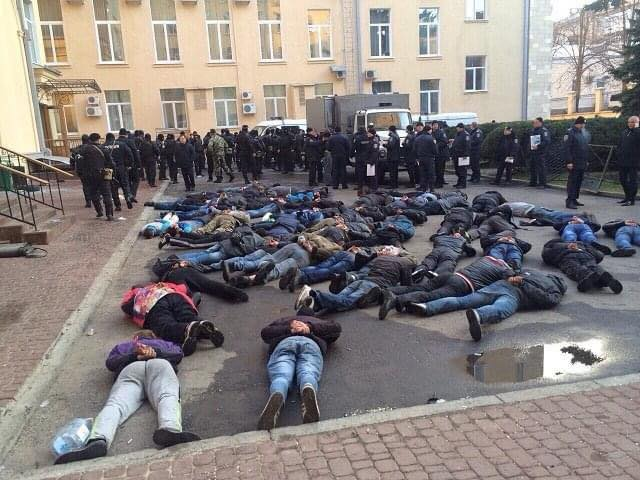
However, in Kharkiv, a skilfully executed operation by police counter-terrorism units on 8 April led to the arrest of the Russian militants without a single shot being fired or a drop of blood being shed.
At the same time, urgent phone calls were being made by Russian agents to Sergei Glaziv, an adviser to the Administration of the President of the Russian Federation, who was coordinating and financing these military coups.
Less than a week after Kharkiv, ‘Girkin’s group’ – that is, Russian Spetsnaz – would enter the Donbas from Russia, murdering Volodymyr Rybak, mayor of Horlivka, and other civilians and seizing power in Sloviansk.
In less than a month, the Russians will cause a tragedy in Odessa, during which 48 of their supporters will die in a fire they themselves started at the Trade Union House, after Russian agents shot three Euromaidan activists.
1