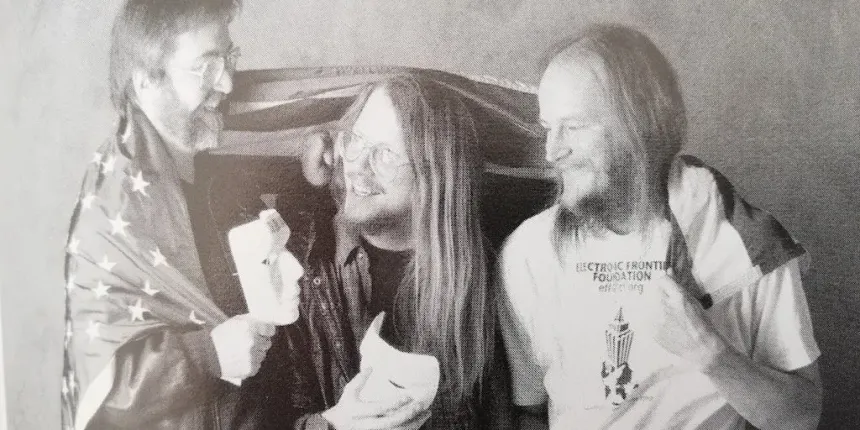
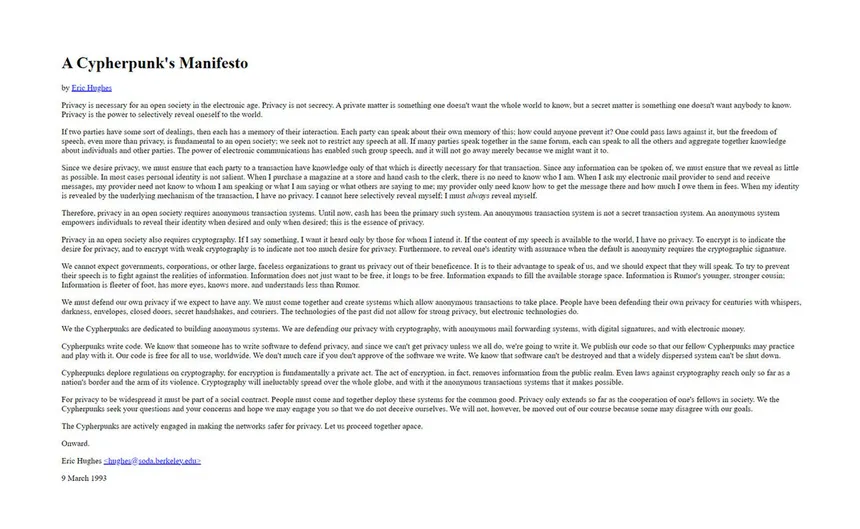
In 1993, a mathematician named Eric Hughes sat down and wrote a declaration of his own.
It was not about a king. It was about privacy, and the machines that were quietly ending it. He called it A Cypherpunk's Manifesto. The core idea was simple and radical: if you want privacy in a digital world, no one is going to grant it to you. You have to build it yourself.
His most famous line is three words long. "Cypherpunks write code." Not petition. Not protest. Not wait for permission. Build the thing that makes the freedom real, then give it away so no one can take it back.
Fifteen years later, Satoshi did exactly that. Bitcoin was not a demand that governments fix the money. It was working code that fixed it, released into the open where no one could recall it.
Here is the lesson that outlived the manifesto. Rights you have to ask for can be revoked. Rights you build into running code are yours to keep.
Independence was never granted. It gets written. Sometimes in ink, sometimes in software.
It was not about a king. It was about privacy, and the machines that were quietly ending it. He called it A Cypherpunk's Manifesto. The core idea was simple and radical: if you want privacy in a digital world, no one is going to grant it to you. You have to build it yourself.
His most famous line is three words long. "Cypherpunks write code." Not petition. Not protest. Not wait for permission. Build the thing that makes the freedom real, then give it away so no one can take it back.
Fifteen years later, Satoshi did exactly that. Bitcoin was not a demand that governments fix the money. It was working code that fixed it, released into the open where no one could recall it.
Here is the lesson that outlived the manifesto. Rights you have to ask for can be revoked. Rights you build into running code are yours to keep.
Independence was never granted. It gets written. Sometimes in ink, sometimes in software.
1236❤️65🤙6❤️3✊🏼1🌻1👍1