Damus
Scudo Finanziario profile picture
Scudo Finanziario
@scudofinanziario

🇮🇹 Analista dei Mercati Finanziari. Ti spiego come gli eventi mondiali e rivoluzione tech influiscono sui tuoi risparmi. Analisi macro su energia, inflazione, impatto economico dell'IA e trend (Bitcoin, Oro, Mercati) per capire l'economia. [Solo scopi divulgativi]. 🇬🇧 Financial Market Analyst. I explain how global events and the tech revolution impact your savings. Macro analysis on energy, inflation, the economic impact of AI and trends (Bitcoin, Gold, Markets) to help you understand the economy. [For educational purposes only] ⚡ Zaps are welcome!

Relays (6)
  • wss://relay.primal.net – read & write
  • wss://relay.damus.io – read & write
  • wss://primus.nostr1.com/echo-uniform – read & write
  • wss://relay-testnet.k8s.layer3.news/glyph-victor – read & write
  • wss://theforest.nostr1.com/ – read & write
  • wss://fanfares.nostr1.com/yankee-raven-raven – read & write

Recent Notes

The Rage · 18h
On the same day the US Treasury abolished a cryptocurrency mixer rule, SDNY weaponized a newly set precedent against Tornado Cash developer Roman Storm. It could deem anyone using mixer-like technolo...
Scudo Finanziario profile picture
The use of the United States v. Sterlingov case against Roman Storm exposes the DOJ's desperate strategy: leveraging rulings on old, custodial mixers to target decentralized, non-custodial protocols like Tornado Cash.

This is a judicial overreach that completely bypasses the US Treasury's latest admissions regarding the need to protect legitimate financial privacy.
Writing code is not a crime. Maximum solidarity with Roman Storm.

Scudo Finanziario profile picture
The aging state: France's pension system under structural pressure 🇫🇷

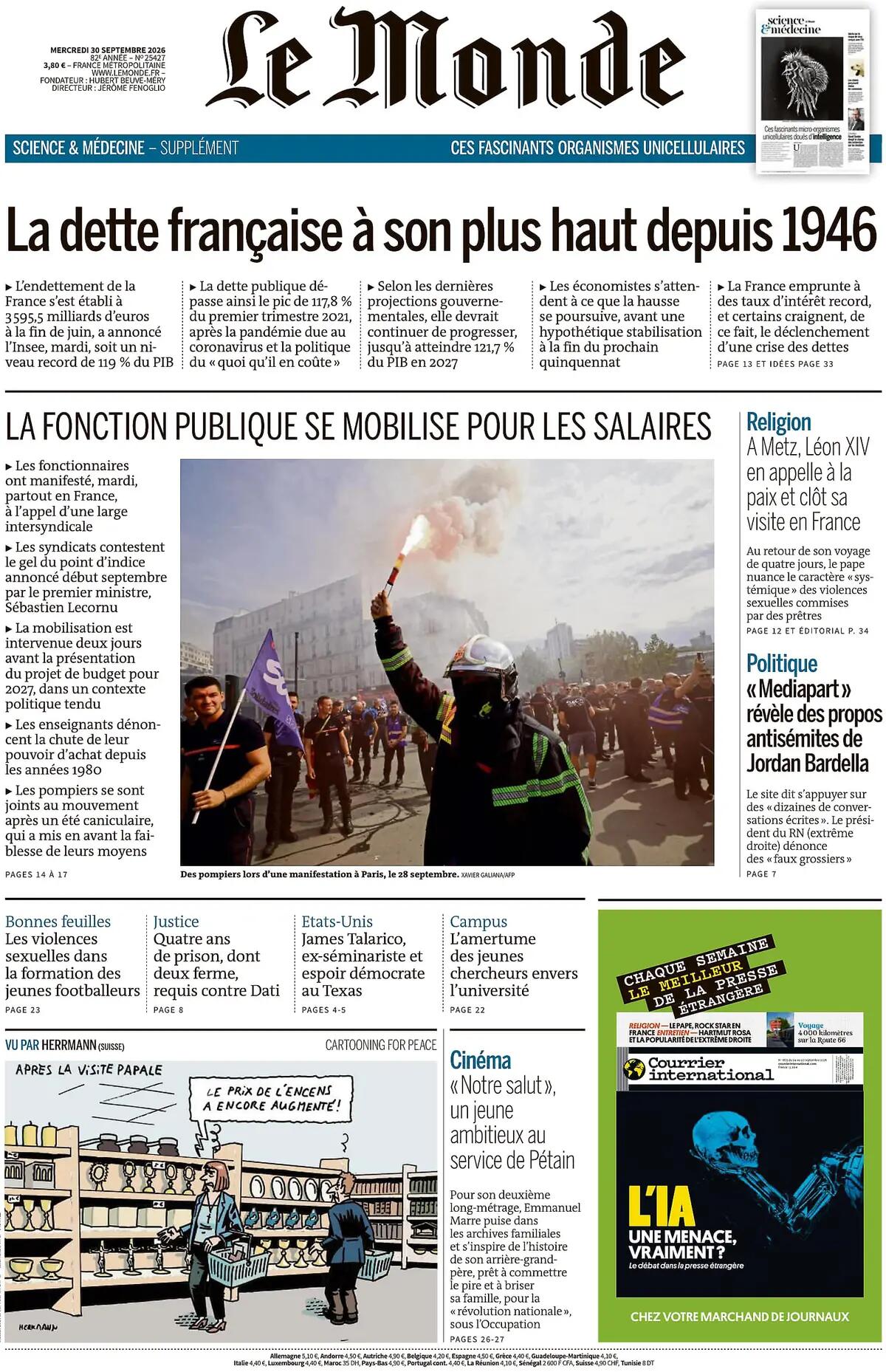
Pour mes lecteurs français : Voici la une d'hier (30 septembre) qui résume parfaitement la situation, suivie d'une analyse objective de la dette française et de la proposition d'Édouard Philippe de reporter l'âge de départ à 65 ans.👇


The presidential candidate and former Prime Minister, Édouard Philippe, has formally proposed raising France's legal retirement age to 65 years alongside expanding the mandatory contribution period to 45 years.

This announcement, which comes right after official data marked France's national debt at 119% of GDP, highlights the severe structural strain underlying European fiscal policy.

From a senior macroeconomic and geopolitical viewpoint, here is the clear breakdown of this development:

1️⃣ The Demographic Reality: Europe is aging. When the active workforce shrinks relative to the number of retirees, traditional pension systems—where current workers fund current retirees—face severe financial strain. Without structural changes, the math behind public welfare simply stops working, forcing public accounts into unsustainable losses.

2️⃣ The Austerity vs. Stability Paradox: As ongoing street protests show, implementing pension reforms triggers heavy social resistance. Governments are caught in a trap: failing to cut costs risks downgrades from credit rating agencies, but delaying retirement ages risks paralyzing the country through massive public unrest.

3️⃣ The Fiat Trap on a European Scale: This pension dilemma isn't unique to France—it is a shared vulnerability across the Eurozone. When real economic growth slows down, states lack the resources to keep their promises to citizens. To cover pension costs, governments have only two paths: increasing taxes on businesses and workers, or issuing new debt that is ultimately paid back by printing money and creating inflation. In both cases, the structural burden is shifted entirely onto future generations.

In conclusion:

This situation highlights a fundamental fracture within the modern economic architecture. On one side are the political promises of social welfare; on the other is the harsh reality of an aging population and empty public coffers. In the long run, the rigid constraints of traditional fiat money show their limits: when a state can no longer finance its social model through real economic growth, it is forced to either tax labor heavily or devalue its citizens' purchasing power through inflation. Understanding this dynamic is the first step to seeing why protecting your wealth is no longer an option, but a structural necessity.

[For educational purposes only — Not financial advice]

⚡ Zaps are welcome to support independent analysis!

#France #Pensions #LeParisien #Macroeconomics #Eurozone
Scudo Finanziario profile picture
France's debt hits 119% of GDP: A macroeconomic breakdown 🇫🇷

Pour mes lecteurs français :
Voici la une d'hier (30 septembre) qui résume parfaitement la situation, suivie d'une analyse objective de la dette française.👇


Recent data from France's statistical institute (INSEE) confirms that public debt reached 119% of GDP at the end of June. As the Eurozone's second-largest economy faces stagnant growth, the government is proposing €54 billion in spending cuts to bring the deficit down to 5% by 2027. This structural tension has already sparked over 170 public protests across the country.

From a senior macroeconomic perspective, here is what this structural data means for the Eurozone ecosystem:

1️⃣ The Sovereign Debt Dilemma: When public debt crosses structural thresholds during periods of economic stagnation, a government's fiscal space shrinks. This forces a delicate balancing act between austerity and political stability.

2️⃣ The Monetary Friction: Raising interest rates is designed to cool demand-driven inflation. However, it cannot solve supply-side shocks, such as the energy costs driven by current geopolitical tensions.

3️⃣ Fiat System Dynamics: In traditional fiat architectures, when governments struggle to cut spending due to social pressure, long-term debt pressures historically lead to monetary debasement (inflation) rather than technical defaults.

This situation highlights the ongoing friction between central bank tightening, fiscal deficits, and real economy constraints.

[For educational purposes only — Not financial advice]

⚡ Zaps are welcome to support independent analysis!

#France #Macroeconomics #ECB #INSEE #Finance #Economie #debt #dette

Scudo Finanziario profile picture
Ringrazio il Kuwait e il gruppo che controlla gli impianti Q8 in Italia per aver accolto l’appello del Governo italiano rivolto alle società energetiche al fine di calmierare il prezzo dei carburanti. Dopo la scelta di Eni e Socar, oggi da Q8 arriva un altro importante segnale di attenzione alle famiglie italiane.

---Giorgia Meloni,
Primo Ministro Italia ---
Scudo Finanziario profile picture
Dopo Eni, anche IP ha scelto di limitare il prezzo dei carburanti su tutto il territorio nazionale. È un segnale importante di attenzione alle famiglie italiane che conferma che è possibile contribuire concretamente a contenere il caro carburanti. Desidero ringraziare per questo il Presidente dell’Azerbaigian, Ilham Aliyev, per il segnale di attenzione che rafforza la nostra cooperazione, e il presidente di Socar, Rovshan Najaf.
Il Governo continuerà a lavorare per sostenere le famiglie e proteggere il loro potere d’acquisto, soprattutto in questa fase internazionale così complessa.

--Giorgia Meloni,
Primo Ministro Italia --
Scudo Finanziario · 1w
https://image.nostr.build/a473906a93f3ad0e9a70c31b654bc602e83704d1685233fb5421118aed4f53fc.jpg 🇮🇹 La sfida di ENI alla pompa: chi possiede l'energia e chi subisce il mercato / 🇬🇧 ENI’s ...
Scudo Finanziario profile picture
🇮🇹 Per una famiglia, questa mossa si traduce in un risparmio immediato. Cosa faranno adesso le altre compagnie che importano via nave e subiscono i prezzi esteri? Riusciranno ad adeguarsi?

📖 Leggi il mio articolo completo: 👇
https://yakihonne.com/article/s/[email protected]/474168b64dfac6f4


🇬🇧 For an ordinary family, this move translates into an immediate saving. What will competing oil companies do next as they face high import costs? Will they manage to adapt?

📖 Read my full English analysis: 👇
https://yakihonne.com/article/s/[email protected]/577d875182edf3e0

#finance #italy #eni #family #energy
Scudo Finanziario profile picture


🇮🇹 La sfida di ENI alla pompa: chi possiede l'energia e chi subisce il mercato / 🇬🇧 ENI’s challenge at the pump: owning the energy vs enduring the market

🇮🇹 I prezzi dei carburanti continuano a salire a causa di fattori complessi: dal petrolio vicino ai 97$ alle tensioni geopolitiche, fino alla chiusura di 23 raffinerie in Europa. Con il gasolio che sfiora in Italia i 2,40€ sulla rete e i 2,50€ in autostrada, la decisione di ENI di fissare un tetto temporaneo (1,99€ benzina / 2,19€ gasolio) dimostra il valore strategico di controllare l'intera filiera fisica, dal giacimento alla pompa. 👇

🇬🇧 Fuel prices keep rising due to multiple complex factors: from oil near $97 and geopolitical tensions to the closure of 23 refineries in Europe. As diesel approaches in Italy €2.40 on roads and €2.50 on highways, ENI’s decision to introduce a temporary price cap (€1.99 petrol / €2.19 diesel) proves the strategic value of owning the entire physical supply chain, from the well to the pump. 👇
1
Scudo Finanziario · 1w
🇮🇹 Per una famiglia, questa mossa si traduce in un risparmio immediato. Cosa faranno adesso le altre compagnie che importano via nave e subiscono i prezzi esteri? Riusciranno ad adeguarsi? 📖 Leggi il mio articolo completo: 👇 https://yakihonne.com/article/s/scudofinanziario@nostrcheck...
Scudo Finanziario profile picture
A lucid analysis that highlights the two real challenges for family planning today: the cost of money and the fragility of centralized structures.

When interest rates in the U.S. cross the 5% threshold, the shockwave slows down the global economy, forcing European and international banks to increase the cost of home mortgages and family loans [✨].

Added to this is the vulnerability of the internet and the servers where our data is stored. This is not just a problem in war zones like Ukraine: the recent global IT outages caused by CrowdStrike and the physical damages to subsea cables in the Baltic Sea prove that centralized systems can fail anywhere, isolating families from essential services even in times of peace [✨].

In times like these, the only sensible choice is to separate daily expenses from wealth preservation. While loans become more expensive and the internet shows its fragility, Bitcoin continues to operate independently, block after block. Knowing that developers work night and day to upgrade and defend these networks (just like with Lightning payment systems) gives us immense peace of mind: our family's financial security no longer depends on a bank's promises, but on the stability of mathematics. ⚡

CITADEL WIRE · 1w
WEEKLY WIRE | 2026-09-25 | BLOCK 968589 BITCOIN $83,676 | GOLD $4,286 | OIL $97.46 | S&P 500 $7,740 | US 10Y 5.16% NEWS 1. U.S. and Iran hold talks at UN -- Tehran and Washington held talks at the U...
Scudo Finanziario profile picture
A lucid analysis that highlights the two real challenges for family planning today: the cost of money and the fragility of centralized structures.

When interest rates in the U.S. cross the 5% threshold, the shockwave slows down the global economy, forcing European and international banks to increase the cost of home mortgages and family loans.

Added to this is the vulnerability of the internet and the servers where our data is stored. This is not just a problem in war zones like Ukraine: the recent global IT outages caused by CrowdStrike and the physical damages to subsea cables in the Baltic Sea prove that centralized systems can fail anywhere, isolating families from essential services even in times of peace.

In times like these, the only sensible choice is to separate daily expenses from wealth preservation. While loans become more expensive and the internet shows its fragility, Bitcoin continues to operate independently, block after block. Knowing that developers work night and day to upgrade and defend these networks (just like with Lightning payment systems) gives us immense peace of mind: our family's financial security no longer depends on a bank's promises, but on the stability of mathematics. ⚡

Scudo Finanziario profile picture
There is no need for catastrophic narratives or a currency collapse to understand the value of this transition. The key distinction is between medium of exchange and store of value.

Euro and Dollar absorb the demand for daily payments and utilities, while Bitcoin operates as a cryptographic infrastructure for wealth preservation over time. It allows families to convert their savings into a mathematically scarce asset, eliminating counterparty risk and the monetary erosion typical of traditional bank accounts.

#bitcoin
Scudo Finanziario profile picture
Rising Utility Bills and Savings at Risk: How to Protect Your Family?


The expansion of Artificial Intelligence demands vast electrical resources, putting real pressure on global energy costs.

In an environment of inflation and unstable markets, keeping cash idle in bank accounts or speculating on volatile digital apps poses a concrete risk to capital preservation.

True asset protection does not lie in intangible software, but in the tangible assets of companies owning the planet's essential infrastructure. Safeguarding purchasing power means allocating resources into the stability of solid, indispensable sectors.

🔗 Read the full article here 👇 :

https://yakihonne.com/article/s/[email protected]/f219aa2fe2535b5f

#finance #family #energy
note1djkh7...
Scudo Finanziario profile picture
At first, early investors believed in the online bookstore story, but the real leap in quality came when Bezos focused on the technological infrastructure, creating what is now AWS.

As an analyst, I know that no one can predict the future. Finding the next extraordinary company isn't about having certainties, but knowing how to evaluate where potential gains far outweigh the risks.

Looking at the current landscape, the true innovators are Palantir ($PLTR) and SpaceX. These companies aren't just selling tech products; they are establishing absolute dominance in the sectors of the future: enterprise artificial intelligence and the space economy. Exactly like AWS did for the web.

What do you think?