Damus
Greg Restall profile picture
Greg Restall
@Greg Restall

Philosopher and logician, from Australia, now based at the University of St Andrews in Scotland.

I like thinking about—and helping other people think about—logic and philosophy and the many different ways they can inform and enhance each other.

I suppose I’m known for work on substructural logics, logical pluralism, and (more recently) what philosophers should know about proof theory, and proof theorists should know about philosophy.

#philosophy #logic

Relays (1)
  • wss://relay.ditto.pub – read & write

Recent Notes

Greg Restall profile picture
This post by Hannah Forsyth, on Crooked Timber, is a helpful articulation of some of the thoughts I have been having—with my St Andrews colleagues—as we reconsider the point of teaching and research, in the present context.

As a fellow survivor of the ravages of managerialism in Australian Universities from 1990 to 2021, I found the pointer to Pete Chalmer’s notion of the “thru-put” model of education, with all of its dessicating consequences for the long slow work of _learning_, really helpful.

In this coming academic year I’ll be encouraging my students—more wholeheartedly than ever—that if they’re showing up to learn with me (where that is so much more than producing an “academic output”), I’ll be there with them and doing everything I can to be present with them to help them along the way. This takes effort and engagement on all sides, and can’t be short-circuited by offloading the hard work to a robot.

https://crookedtimber.org/2026/08/04/if-you-cant-be-bothered-writing-it-i-cant-be-bothered-reading-it/
Greg Restall profile picture
I noticed that in the last day or so I’d got increased traffic to my rarely-visited personal site. Quite a few folks were reaching the home page, and a surprising number were landing on an old post of mine from 2004 about Haskell. Why on earth did _that_ happen?

Well, on August 2, John MacFarlane posted a 20 year retrospective on his much-used document conversion toolkit, pandoc. In telling the tale, John mentioned that he got turned on to Haskell back in 2004/5 because that old post of mine.

(Given the reach of John’s beautiful and useful toolkit, this may well—no joke—be the widest impact I’ve had on the profession or the wider world.)

Thanks for the shout-out, John, and for all your hard work with the rest of the pandoc team on crafting a truly useful tool.

(I also think that John’s side gig in philosophical logic is great, too.)

https://pandoc.org/twenty-years-of-pandoc.html
Greg Restall · 4d
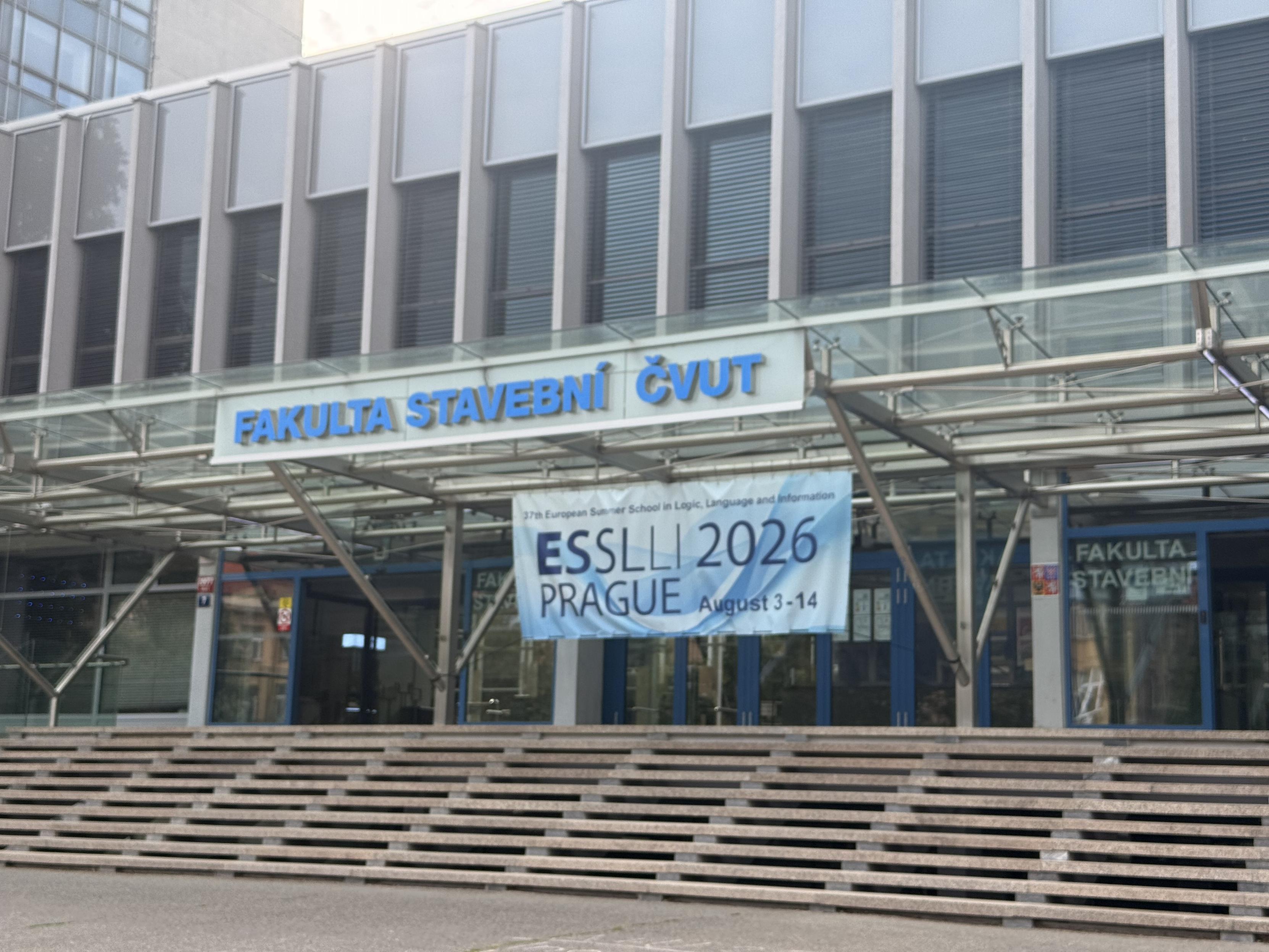
I'm teaching a course on bilateralism in logic, with Sara Ayhan. Slides and other material will find their way here: https://consequently.org/class/2026/bilat-esslli/
Tariq · 2w
nostr:nprofile1qy2hwumn8ghj7un9d3shjtnyd968gmewwp6kyqpqaa3gj7gcnc8v9d28qac8jhthr7hjchyxnydm0jmc4e8jqureggyswq0dx7 Why doesn't this explanation of falsehood apply to the first statement which also ha...
Greg Restall profile picture
@nprofile1q... Why should that explanation apply in the case of All? "All" and "Some" mean different things and have a different logic.

They are connected in that if All Fs are Gs, then it's *not* the case that Some Fs are not Gs. And conversely, if it's not the case that some Fs are not Gs, then All Fs are Gs.

If you follow that, you see that if there are no Fs, since it can't be the case that some Fs are not Gs (since there are no Fs at all), then indeed all Fs (vacuously) are Gs.
Tariq · 2w
nostr:nprofile1qy2hwumn8ghj7un9d3shjtnyd968gmewwp6kyqpqaa3gj7gcnc8v9d28qac8jhthr7hjchyxnydm0jmc4e8jqureggyswq0dx7 Why doesn't this explanation of falsehood apply to the first statement which also has a false antecedent?
Thomas Seiller · 2w
My paper about a proposed formal definition of algorithms is now published as part of the proceedings of CiE 2026. It already contains some hints at my recent interests in whether learning can be und...
Greg Restall profile picture
@nprofile1q... I’m glad this is now published. Your account has been helpful in my own thinking about the general issue of identity conditions for algorithms and the insight this can give into the sense/reference distinction and the semantics of belief ascription and other propositional attitudes.
Victor Gijsbers · 4w
nostr:nprofile1qy2hwumn8ghj7un9d3shjtnyd968gmewwp6kyqpqaa3gj7gcnc8v9d28qac8jhthr7hjchyxnydm0jmc4e8jqureggyswq0dx7 It's only about 2.5 hours from where I live, but somehow I still haven't planned a city trip. 😄
Greg Restall · 4w
This is followed by Bilateralism in Bochum 2026, for Thursday and Friday: https://sites.google.com/view/bilbo26/home Both look like they’ll be packed and productive meetings. (I hope I have the stamina required for five full days of logic.)