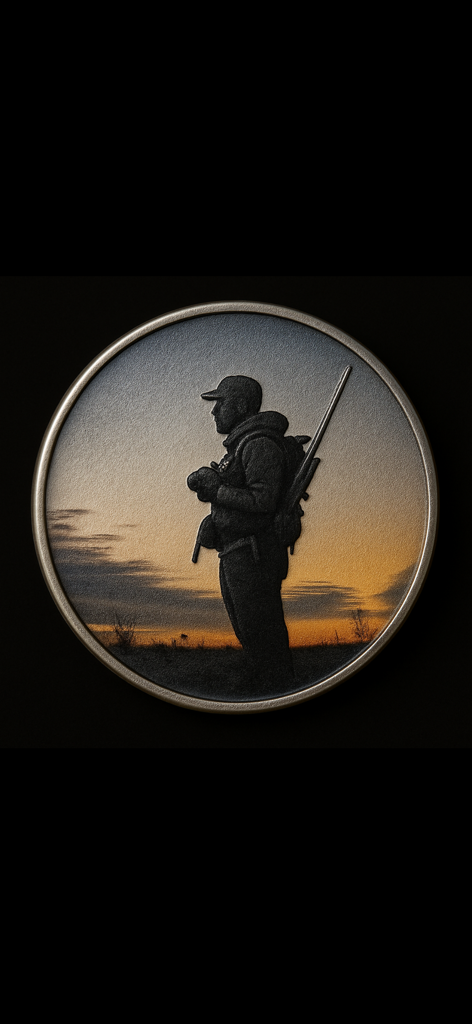
I took my sons up into the Serra de Sintra today.
We went because the land was alive after weeks of rain, and because the day was cold and crisp, and the air was fresh. We went because it felt good to move in a place like that, to feel the wind, to walk, to be awake inside our bodies.
The Atlantic wind was moving fast, shouldering the clouds across the ridge, breaking light open and sealing it again. Everything was green in that deep, saturated way that only comes after weeks of rain. The stone was dark. The air was sharp. It demanded attention.
Everywhere along the path, small transient streams were forming, draining away the rain from the weeks before. Water ran quickly over stone, clear and cold, cutting narrow channels before disappearing downslope. Despite all that rain, the ground was not muddy. We were high enough that the water never sat. It moved on, as it should.
We climbed toward the Ermida de São Saturnino, above the Santuário da Peninha, with the weather changing minute by minute. Cold enough to feel in the fingers. Clean enough to wake the lungs. The kind of day that reminds a boy, without words, that the world is bigger than comfort.
Along the way we passed trees that had been taken down by the wind. Some were so large it would have taken four of me, arm to arm, to circle the trunk. They lay where they fell, roots torn from the ground. It was good for the boys to see the force that had done that, and the aftermath it leaves behind.
Not far off the path, two small wild horses grazed on the mountainside. We watched them for a while and wondered aloud what it would have been like to live that way, exposed to the wind and rain, needing to find shelter and food through attentiveness and cunning. Survival was no longer an idea. It was standing in front of us.
At the top we entered the Ermida de São Saturnino, a small mountain church close to a thousand years old by local reckoning. We walked through it slowly. Its condition had worsened since the last time I had been there. What had once shown traces of plaster and painted walls had peeled away, leaving stone and decay behind. I spoke with my sons about the care required to preserve beautiful things, and about what is lost when a people forget where they came from and allow their inheritance to crumble.
When we stepped back outside, the views opened wide in every direction. Massive rounded boulders lay scattered across the mountainside, some the size of a car, others as large as a small house. I pointed them out and explained how they had been carried and shaped tens of thousands of years ago by enormous ice sheets that once pushed across Europe, grinding stone smooth and depositing it here near the edge of their advance.
I asked my oldest to imagine a wall of ice thirty or forty meters high, moving slowly but relentlessly toward us. To imagine standing in front of it as a Stone Age human, watching the world you knew disappear under cold and silence. For the people who lived through that time, it would have felt like the end of the world. In many ways, it nearly was. Most life was wiped away. Much of Europe was emptied.
And yet we survived. Humanity endured generations of winter, ice, and scarcity. Standing there, above the forests and stone, that fact carried weight. If our ancestors could endure that, we can endure the ordinary difficulties that meet us in our own lives.
That matters.
Why places like this matter to children
Children do not primarily learn from what we explain. They learn from what we show them.
Before a principle can be understood, it has to be lived. A child needs to feel the wind, the distance, the effort, the weight of the world pressing back. Only after that does the mind open to the deeper questions of why things are the way they are.
You demonstrate first. You let them experience it. Then, later, words can land.
A dramatic landscape teaches proportion.
Wind teaches resistance.
Cold teaches presence.
Distance teaches effort.
None of this is abstract to a child. It enters through the body first, and only afterward settles into understanding.
A principle offered without experience has nothing to attach to. It remains hollow. We are not built to understand what we have not encountered.
When a boy walks uphill in weather that does not bend for him, something aligns. He learns that the world is real, that his father is competent inside it, and that effort has meaning.
You do not need a lecture for that.
You need to go.
Fatherhood is lived out in the world
Modern fatherhood has become dangerously compressed.
Too much time inside.
Too much talking.
Too much management of feelings detached from reality.
Men sense that something is missing, but often cannot put their finger on it. What is missing is shared exposure to the real world, terrain that cannot be negotiated, weather that cannot be reasoned with, paths that must simply be walked.
When a father takes his children into real places, he is doing more than spending time with them.
He is saying, without announcing it:
“This is the world. I am at home in it. You will be too. ”
That message lands deeper than reassurance ever could.
Why I build memory, not entertainment
I am not trying to entertain my sons.
I am trying to form them into men.
Years from now, they will not remember every conversation we had, but they will remember days like this.
They hiked the entire way, up and down, across loose, fist-sized rock, without complaint. They sang. They smiled. They enjoyed the cold air and the wide views. Halfway up we stopped briefly for a simple snack: bread, butter, and water. Food meant to answer hunger on a long walk, nothing more.
They will remember who they were when they were with me.
Cold hands.
Fast clouds.
Stone walls.
A steady pace.
A father who knew where he was going.
Those memories become internal landmarks. They are recalled later, often unconsciously, when life becomes uncertain. A man who has been led well through real terrain carries that map inside himself.
This is where 52 Letters to My Son comes from
Experiences like this are not separate from my work.
They are the source of it.
52 Letters to My Son exists because fatherhood deserves structure, not improvisation.
Most men love their children deeply.
Few men have been given a clear framework for translating that love into long-term formation.
The program does not replace moments like this.
It anchors them.
Each week, fathers slow down long enough to ask:
What did this mean?
What did my child see in me?
What do I want them to understand later, when I am no longer beside them on the path?
Then they write.
One letter at a time.
Calm.
Deliberate.
Grounded in lived experience, not theory.
Over time, those letters become something powerful: a written map of a father’s mind, values, and steady presence.
An invitation
You do not need to hike in Sintra.
You do not need ancient stone or Atlantic wind.
What matters is leaving the house and living with your children.
Life is not formed by sitting indoors all day. Children do not grow strong, capable, or grounded through screens and simulated worlds. They grow by moving, by going somewhere real, by sharing experience with a father who is present and engaged.
Your children are forming whether you are deliberate or not.
The only question is whether you are willing to father on purpose.
That is what 52 Letters to My Son is for.
Not to make you perfect or a uniform clone of some ideal of fatherhood.
But to help you become the kind of father whose presence your children will carry with them, long after the walk is over.
Find 52 Letters to My Son at
http://themetafather.com