

Sunday Energy Post #34
I don't really have much to talk about this time. But I think District Heat is a pretty interesting topic.
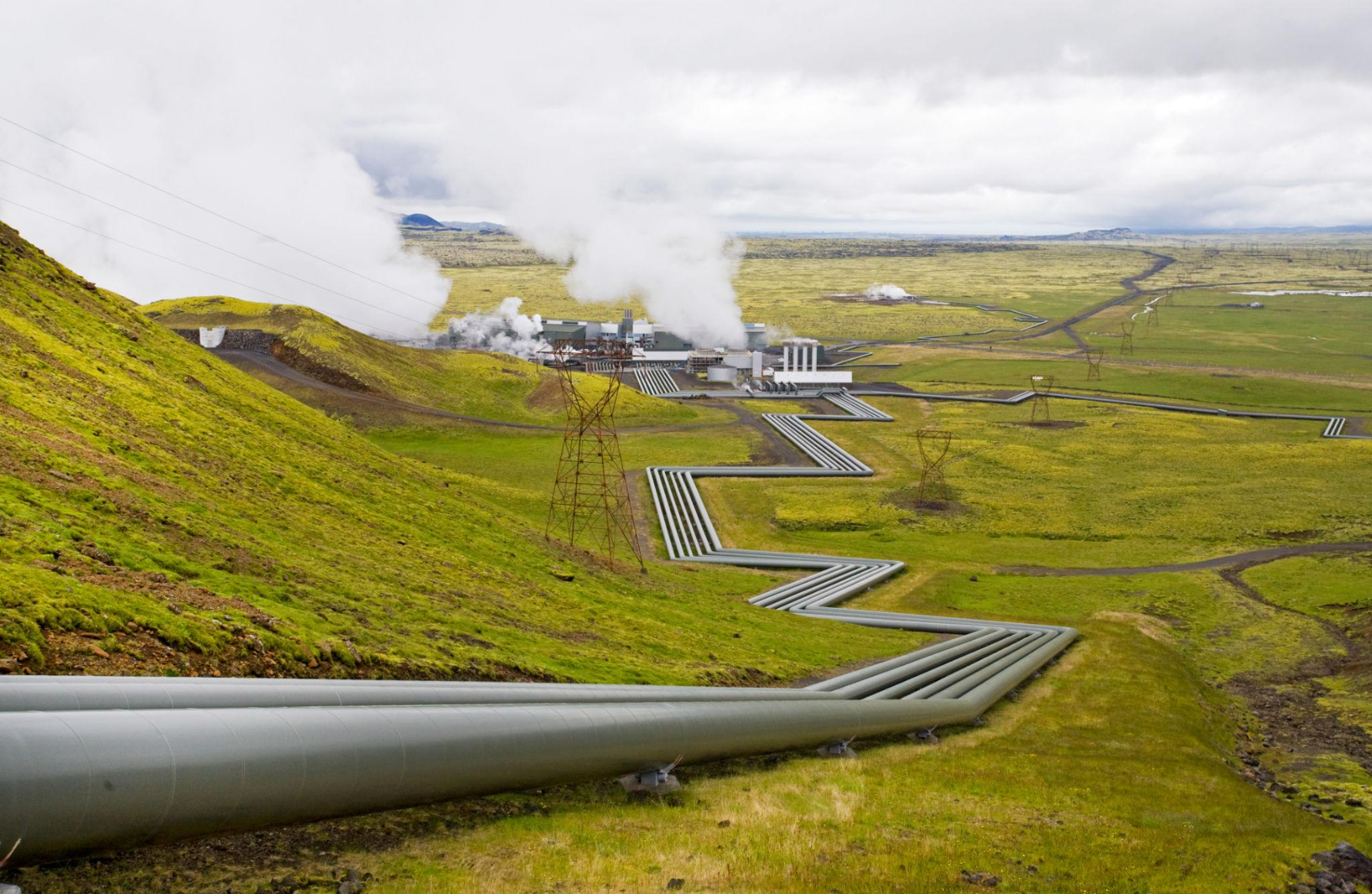
In Iceland, there is plenty of hot geothermal at depths that are easily drilled to. This is used to make steam and generate electricity, but there is also hot water that comes up, and that is piped around the island and heat the homes and businesses of 87% of all icelanders. Because the price of heat is so low, they even heat the roads and sidewalks to melt the snow and ice - which reduces the need for plowing and salt.
What's interesting about this is the design is roughly the same concept as a natural gas network, but unlike natural gas it's energy source agnostic, and if your power plants are setup right, it's close to free.
Traditional PWR nuclear power plants run pressurized water at 300C, but modern ultra-supercritical coal plants run at around 600C. In either case, the cold side is designed for about 30C which is the coldest that a cooling tower can reliably get to. Typical efficiency for a PWR reactor is about 33%, and 44% for USC coal (the bigger temperature difference is a big deal).
If the plants were to condense at a slightly higher temperature, say 100C, then the PWR would (GPT's estimate) come down to about 24% efficiency but the USC coal plant would only fall to about 40%.
Where this becomes more interesting is in advanced nuclear reactors that are capable of operation at temperatures upward of 600C, for example molten salt reactors. At these temperatures, it would be possible to use ultra-supercritical turbines that are used in coal plants, and a few percent of efficiency loss is not nearly as big a deal when fuel is not the dominant cost driver. PWR reactors happily accept worse...
In France, there is 510 TWh/year of low temperature (<= 100C) heating demand and a big portion of that (30-50%) is serviced by natural gas. That's 58GW of continuous heat generation all year, so maybe it tops out at about 100GW in the winter. According to GPT, you can expect about 1 MW of heat for every 1 MW of electrical generation from a powerplant.
Unfortunately for France, all powerplants that exist or are under construction are PWR which can't really afford the efficiency hit, but France has about 63GW of operational generating capacity, so its in the right order of magnitude to match the heating demands for the country. Of course this can only reach places where it's worth running a pipeline network to, isolated rural areas are not worth it, so total realistic demand is lower than 510 TWh/year.
You may wonder about the heat loss in the pipes, but it is considered to be about 0.1-1 degree C per kilometer of pipeline, quite negligible.
Overall, I think district heating is interesting at pretty much any scale from a community to a national network. It's a natural match for combined-heat-power powerplants and it can replace both heat and domestic hot water, which are the main applications for natural gas. If the temperature of the water isn't quite high enough for a given application, it can be upgraded using a heat pump which uses far less electricity than using a heat pump with ground or air source.
I don't really have much to talk about this time. But I think District Heat is a pretty interesting topic.
In Iceland, there is plenty of hot geothermal at depths that are easily drilled to. This is used to make steam and generate electricity, but there is also hot water that comes up, and that is piped around the island and heat the homes and businesses of 87% of all icelanders. Because the price of heat is so low, they even heat the roads and sidewalks to melt the snow and ice - which reduces the need for plowing and salt.
What's interesting about this is the design is roughly the same concept as a natural gas network, but unlike natural gas it's energy source agnostic, and if your power plants are setup right, it's close to free.
Traditional PWR nuclear power plants run pressurized water at 300C, but modern ultra-supercritical coal plants run at around 600C. In either case, the cold side is designed for about 30C which is the coldest that a cooling tower can reliably get to. Typical efficiency for a PWR reactor is about 33%, and 44% for USC coal (the bigger temperature difference is a big deal).
If the plants were to condense at a slightly higher temperature, say 100C, then the PWR would (GPT's estimate) come down to about 24% efficiency but the USC coal plant would only fall to about 40%.
Where this becomes more interesting is in advanced nuclear reactors that are capable of operation at temperatures upward of 600C, for example molten salt reactors. At these temperatures, it would be possible to use ultra-supercritical turbines that are used in coal plants, and a few percent of efficiency loss is not nearly as big a deal when fuel is not the dominant cost driver. PWR reactors happily accept worse...
In France, there is 510 TWh/year of low temperature (<= 100C) heating demand and a big portion of that (30-50%) is serviced by natural gas. That's 58GW of continuous heat generation all year, so maybe it tops out at about 100GW in the winter. According to GPT, you can expect about 1 MW of heat for every 1 MW of electrical generation from a powerplant.
Unfortunately for France, all powerplants that exist or are under construction are PWR which can't really afford the efficiency hit, but France has about 63GW of operational generating capacity, so its in the right order of magnitude to match the heating demands for the country. Of course this can only reach places where it's worth running a pipeline network to, isolated rural areas are not worth it, so total realistic demand is lower than 510 TWh/year.
You may wonder about the heat loss in the pipes, but it is considered to be about 0.1-1 degree C per kilometer of pipeline, quite negligible.
Overall, I think district heating is interesting at pretty much any scale from a community to a national network. It's a natural match for combined-heat-power powerplants and it can replace both heat and domestic hot water, which are the main applications for natural gas. If the temperature of the water isn't quite high enough for a given application, it can be upgraded using a heat pump which uses far less electricity than using a heat pump with ground or air source.