

Okay it's time for the Sunday Energy Post!
For people who are new here, we're talking about storing energy. Solar panels are very cheap so there's no reason not to install enough to provide power throughout the year. But solar energy is so asymmetrical that if you have enough panels for "some" power in dark winter months, you're making a SHITLOAD of power in the summer. These Sunday posts are about how to store that energy.
After a broad review of the available technologies, I have become convinced that Ammonia is the most realistic. Batteries will always have a place in temporary storage, given their fantastic efficiency and simplicity of operation, but the price of batteries is too high and for seasonal storage, so ammonia - despite lower efficiency and more hassle - is ideal for filling he gap.
Ammonia has the chemical formula NH3 so all of its components can be gotten directly from air and water. You don't need to truck in a carbon source like coal - and then deal with mineral impurities and so on.
Ammonia is a gas like propane, and it has about half the energy-per-liter. It can be used in an internal combustion engine, or in a fuel cell. It should not be used in a stove as it is toxic and very smelly.
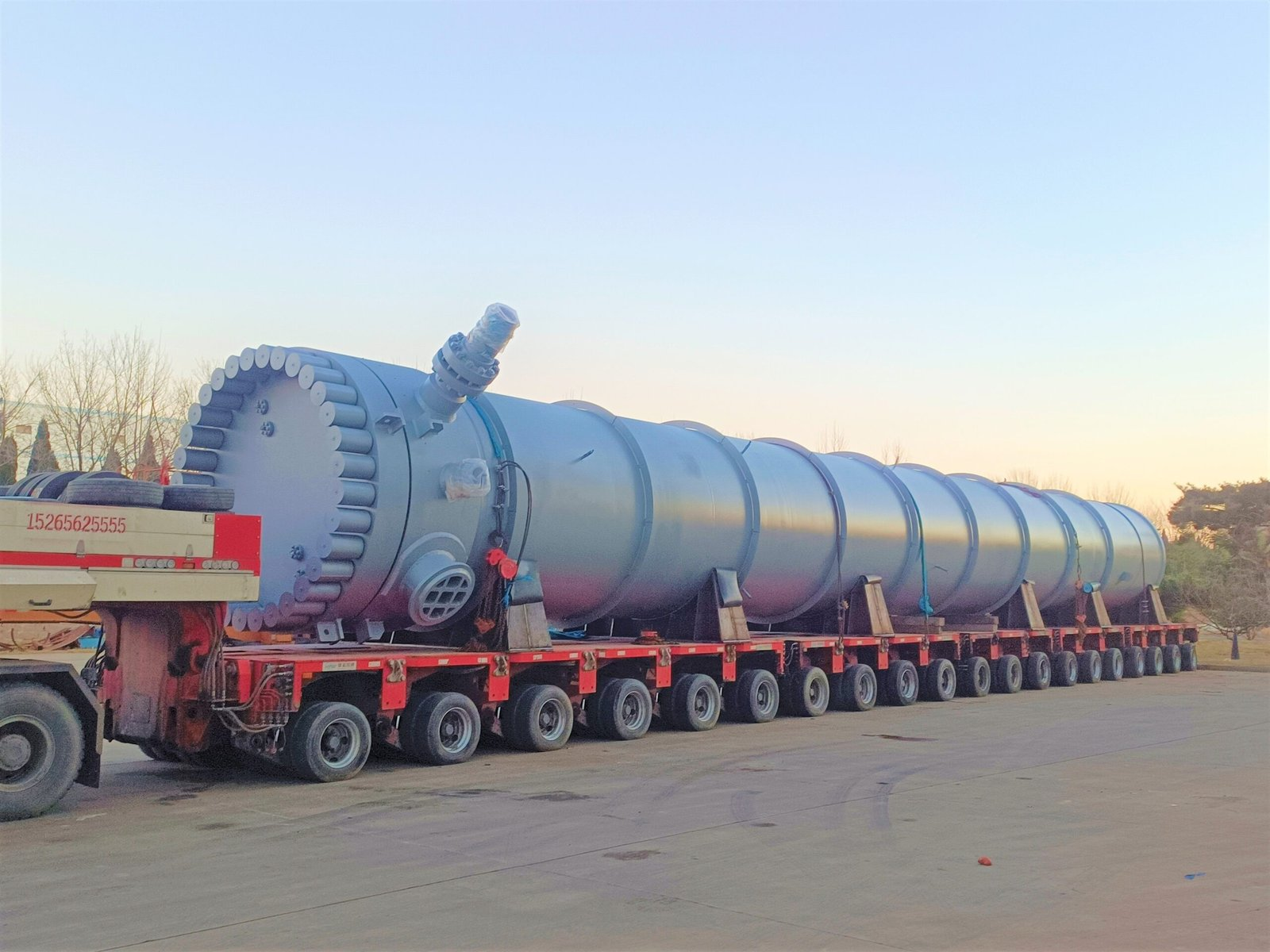
The whole challenge with ammonia is in making it. The classical method requires heat and pressure (the two devils). To wit, 350C (600F) and 300bar (4000psi). This is done in large ammonia plants which have extensive heat recuperation equipment so that they themselves are quite efficient. However, in whole they are inefficient because reactants must be transported to the plant and ammonia must be transported away to the customer. The reaction vessel for making ammonia looks like [fig 1].
I know of two promising technologies for scaling ammonia production down, one is to use a piston to make heat and pressure, and the other is electrochemical to avoid heat and pressure altogether.
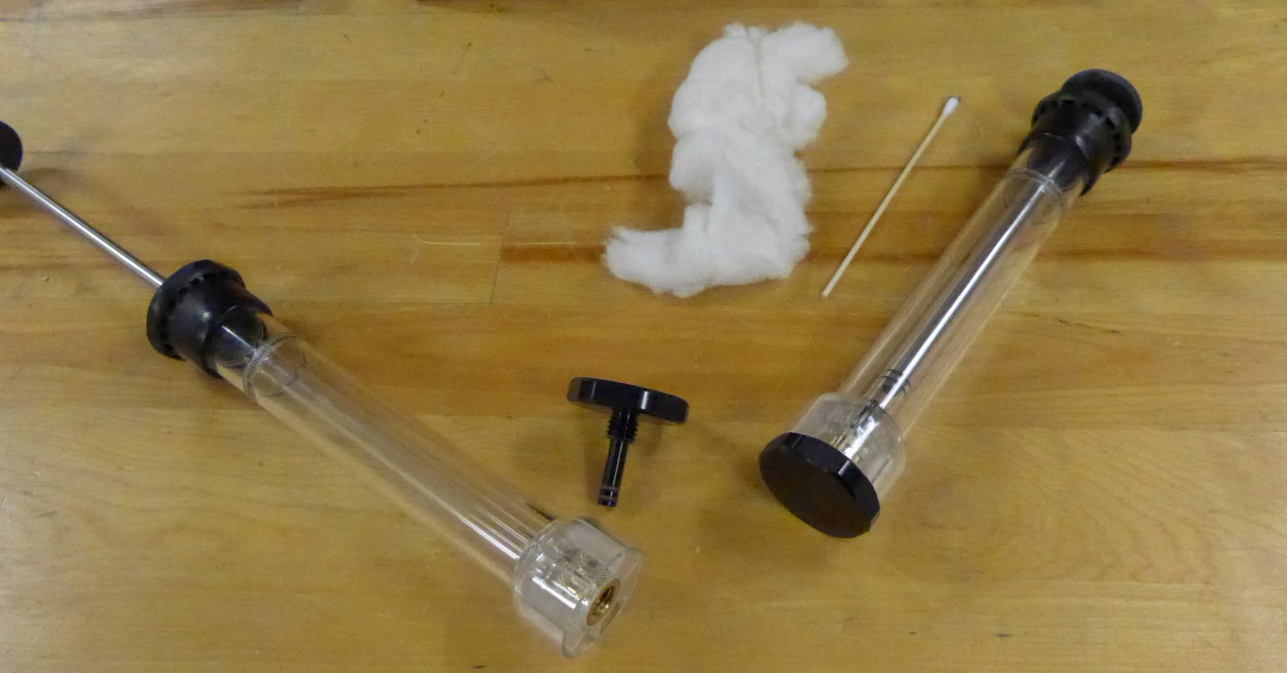
The piston idea is basically that (like in a diesel engine or diesel fire piston [fig 2]) you can get a lot of heat and pressure, temporarily, just by compressing a volume of gas with a piston. Moreover, the majority of that heat and pressure energy is given back to you as the piston returns, saving you the need for a large, high pressure, high temperature heat exchanger.
The piston idea was patented in https://patents.google.com/patent/US4816121A/en and https://patents.google.com/patent/US10399860B2/en (both of which are now expired). However, there is essentially nothing written on whether this Actually Works.
The key question is whether the reaction can be made to happen fast enough that a useful amount of H2+N2 is reacted in each stroke of the "engine".
---
The other promising direction is electrolytic. The topic of "Green Ammonia" is HOT HOT HOT. There are papers, chemistries, startups, and patents popping up like mushrooms all over. Apparently a lot of people have reached the same conclusion that I have.
The real challenge is breaking N2 into single atomic nitrogen because the N2 triple bond is pretty strong (hence nitrogen being considered "inert").
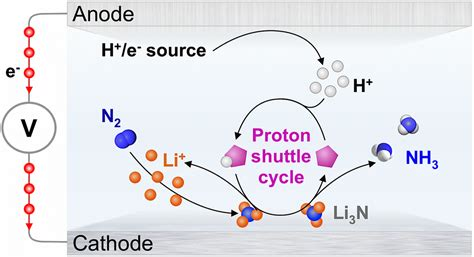
A chemistry that I find quite compelling is Lithium Nitride based [fig 3]. The challenges are:
1. Getting the metallic lithium exposed to nitrogen (gas) to make Li3N (Lithium Nitride)
2. Driving electrolytic hydrogen to the Li3N to release NH3 (ammonia) and return Li+ to plate off as metallic lithium
3. Avoiding the hydrogen ions turning the lithium into LiH (Lithium Hydride) which will then not interact with nitrogen
4. Preventing the metallic lithium from reacting with the electrolyte, which has the job of carrying H+ ions to the Li3N - lithium is insanely reactive and it wants to fuck up everything it touches - which is why it works on nitrogen...
5. Preventing absolutely any water or oxygen from sneaking into the cell, because these will react with the lithium and make LiOH and other trash that is insanely hard to return to useful metallic lithium.
1 is tricky because you want the lithium to touch gasious nitrogen so it becomes Li3N, but also to touch electrolyte so it can be converted back. I think the best idea is to have a cell with liquid level cycling up and down - like breathing.
Choice of electrolyte is another challenge, it needs to transport hydrogen, but it also needs to avoid interacting with lithium. A popular electrolyte is ethanol, but ethanol converts lithium into lithium ethoxide and hydrogen gas. This is mitigated by the fact that it creates an SEI (solid-electrolyte-interface) which stops further degradation. But I'm not that favorable to the SEI because nitrogen needs to also pierce through it. This is not a lithium ion battery.
My favorite electrolyte is actually ammonia itself. Yes, it means the cell must run under some pressure (11bar / 150psi or so), but it reduces the number of unique chemicals in the cell, and it means there's no separation of gasses needed. The only gas is nitrogen, and the product ammonia becomes part of the electrolyte. The interaction risk with ammonia is the same as with hydrogen, it can hydrogenate the lithium - so problems 3 and 4 become the same problem.
Problem number 5 is two-fold, firstly it requires very good nitrogen cleaning because you're pulling N2 out of the air and you don't want any H2O, O2, or other stuff coming along with it. Getting N2 contaminants down to low-PPM numbers is a more-or-less solved problem. The bigger problem is from the hydrogen side. If you want to generate ammonia *efficiently*, you want to combine it with water electrolysis, because the lithium hydride will assist in pulling the H+ ions across, reducing the energy input. So what you do is put water on one side of the cell, ammonia on the other, and a membrane between them. But the membrane must be nearly perfect at excluding H2O while carrying H+. Ion exchange membranes are commonplace, but they typically need to be "wet" in order to work, and they generally leak at least a little bit of water across. There are also ceramic ion carriers, but they need to be hot in order to work. Finding an H+ carrying membrane carrier that will be very good at not passing water is an important part of building a good electrolytic ammonia cell.
For people who are new here, we're talking about storing energy. Solar panels are very cheap so there's no reason not to install enough to provide power throughout the year. But solar energy is so asymmetrical that if you have enough panels for "some" power in dark winter months, you're making a SHITLOAD of power in the summer. These Sunday posts are about how to store that energy.
After a broad review of the available technologies, I have become convinced that Ammonia is the most realistic. Batteries will always have a place in temporary storage, given their fantastic efficiency and simplicity of operation, but the price of batteries is too high and for seasonal storage, so ammonia - despite lower efficiency and more hassle - is ideal for filling he gap.
Ammonia has the chemical formula NH3 so all of its components can be gotten directly from air and water. You don't need to truck in a carbon source like coal - and then deal with mineral impurities and so on.
Ammonia is a gas like propane, and it has about half the energy-per-liter. It can be used in an internal combustion engine, or in a fuel cell. It should not be used in a stove as it is toxic and very smelly.
The whole challenge with ammonia is in making it. The classical method requires heat and pressure (the two devils). To wit, 350C (600F) and 300bar (4000psi). This is done in large ammonia plants which have extensive heat recuperation equipment so that they themselves are quite efficient. However, in whole they are inefficient because reactants must be transported to the plant and ammonia must be transported away to the customer. The reaction vessel for making ammonia looks like [fig 1].
I know of two promising technologies for scaling ammonia production down, one is to use a piston to make heat and pressure, and the other is electrochemical to avoid heat and pressure altogether.
The piston idea is basically that (like in a diesel engine or diesel fire piston [fig 2]) you can get a lot of heat and pressure, temporarily, just by compressing a volume of gas with a piston. Moreover, the majority of that heat and pressure energy is given back to you as the piston returns, saving you the need for a large, high pressure, high temperature heat exchanger.
The piston idea was patented in https://patents.google.com/patent/US4816121A/en and https://patents.google.com/patent/US10399860B2/en (both of which are now expired). However, there is essentially nothing written on whether this Actually Works.
The key question is whether the reaction can be made to happen fast enough that a useful amount of H2+N2 is reacted in each stroke of the "engine".
---
The other promising direction is electrolytic. The topic of "Green Ammonia" is HOT HOT HOT. There are papers, chemistries, startups, and patents popping up like mushrooms all over. Apparently a lot of people have reached the same conclusion that I have.
The real challenge is breaking N2 into single atomic nitrogen because the N2 triple bond is pretty strong (hence nitrogen being considered "inert").
A chemistry that I find quite compelling is Lithium Nitride based [fig 3]. The challenges are:
1. Getting the metallic lithium exposed to nitrogen (gas) to make Li3N (Lithium Nitride)
2. Driving electrolytic hydrogen to the Li3N to release NH3 (ammonia) and return Li+ to plate off as metallic lithium
3. Avoiding the hydrogen ions turning the lithium into LiH (Lithium Hydride) which will then not interact with nitrogen
4. Preventing the metallic lithium from reacting with the electrolyte, which has the job of carrying H+ ions to the Li3N - lithium is insanely reactive and it wants to fuck up everything it touches - which is why it works on nitrogen...
5. Preventing absolutely any water or oxygen from sneaking into the cell, because these will react with the lithium and make LiOH and other trash that is insanely hard to return to useful metallic lithium.
1 is tricky because you want the lithium to touch gasious nitrogen so it becomes Li3N, but also to touch electrolyte so it can be converted back. I think the best idea is to have a cell with liquid level cycling up and down - like breathing.
Choice of electrolyte is another challenge, it needs to transport hydrogen, but it also needs to avoid interacting with lithium. A popular electrolyte is ethanol, but ethanol converts lithium into lithium ethoxide and hydrogen gas. This is mitigated by the fact that it creates an SEI (solid-electrolyte-interface) which stops further degradation. But I'm not that favorable to the SEI because nitrogen needs to also pierce through it. This is not a lithium ion battery.
My favorite electrolyte is actually ammonia itself. Yes, it means the cell must run under some pressure (11bar / 150psi or so), but it reduces the number of unique chemicals in the cell, and it means there's no separation of gasses needed. The only gas is nitrogen, and the product ammonia becomes part of the electrolyte. The interaction risk with ammonia is the same as with hydrogen, it can hydrogenate the lithium - so problems 3 and 4 become the same problem.
Problem number 5 is two-fold, firstly it requires very good nitrogen cleaning because you're pulling N2 out of the air and you don't want any H2O, O2, or other stuff coming along with it. Getting N2 contaminants down to low-PPM numbers is a more-or-less solved problem. The bigger problem is from the hydrogen side. If you want to generate ammonia *efficiently*, you want to combine it with water electrolysis, because the lithium hydride will assist in pulling the H+ ions across, reducing the energy input. So what you do is put water on one side of the cell, ammonia on the other, and a membrane between them. But the membrane must be nearly perfect at excluding H2O while carrying H+. Ion exchange membranes are commonplace, but they typically need to be "wet" in order to work, and they generally leak at least a little bit of water across. There are also ceramic ion carriers, but they need to be hot in order to work. Finding an H+ carrying membrane carrier that will be very good at not passing water is an important part of building a good electrolytic ammonia cell.